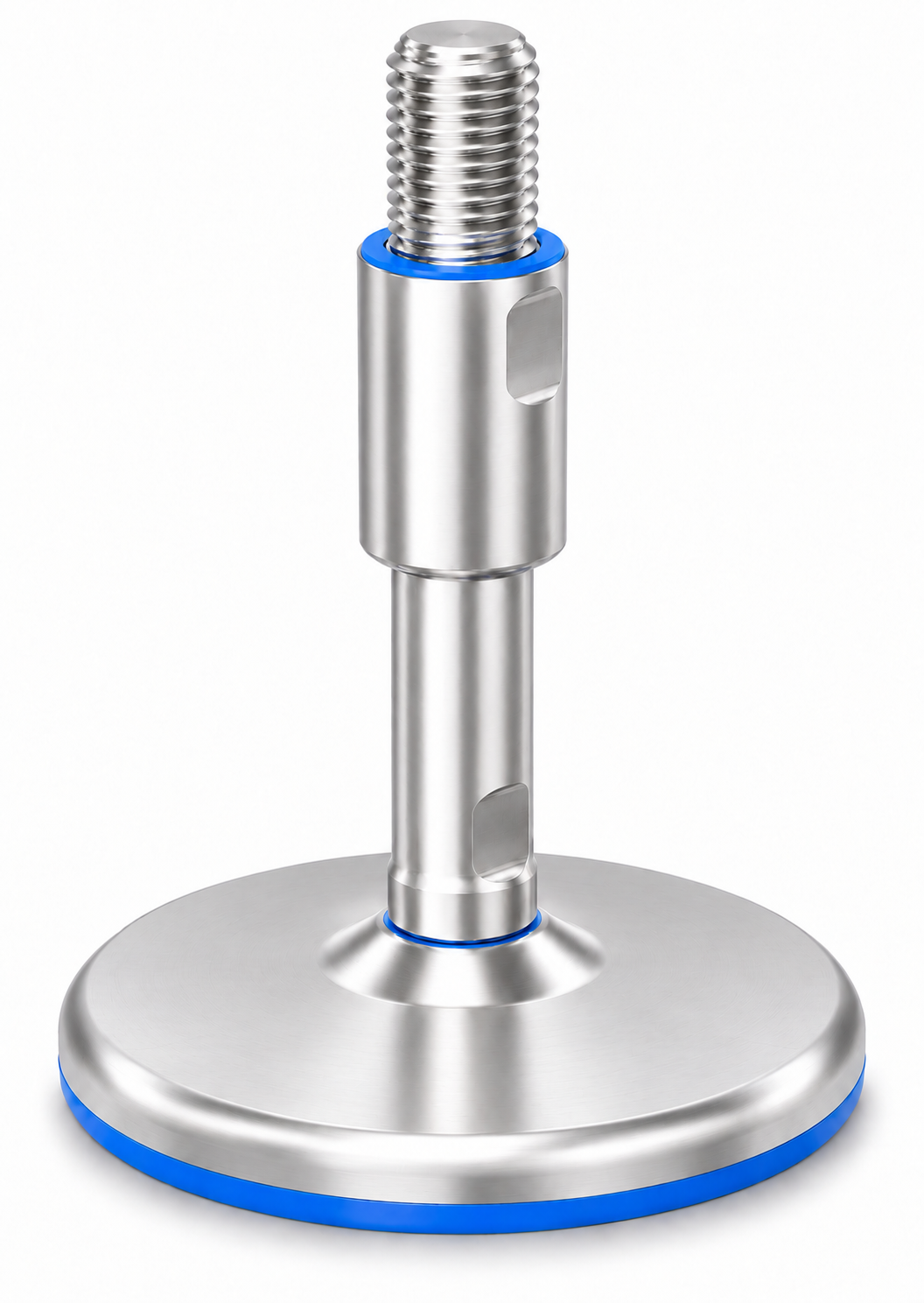
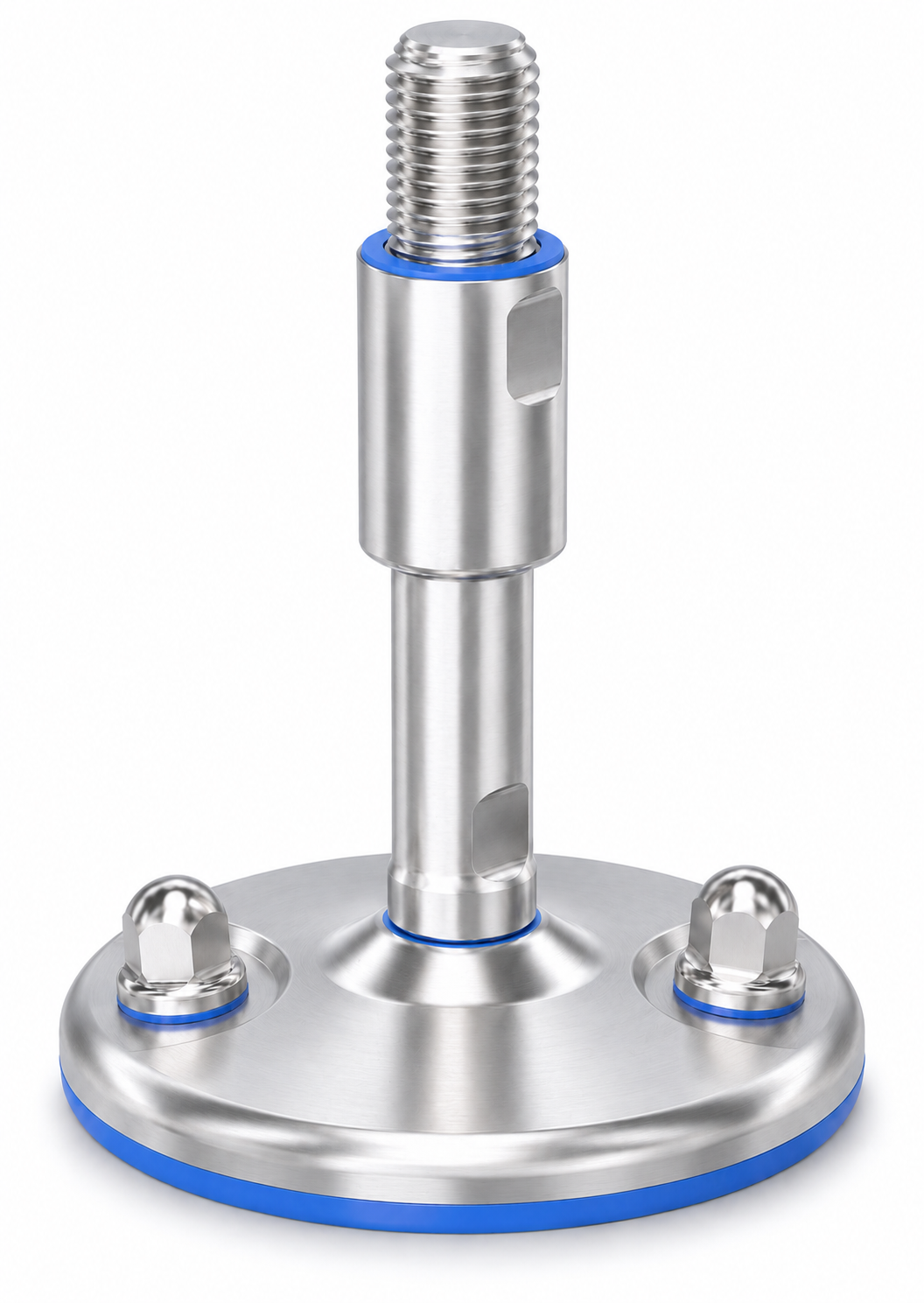
VTF — Hygienic Leveling Feet
Dimensions & Selection
The following specifications apply to both non-bolt-down and bolt-down versions. Select the item number, spindle length and mounting version separately.
On smaller screens, swipe the table to view all specifications.
| Item No. | Base Diameter (mm) | Thread | Spindle Length Options (mm) | Static Load (kN) |
|---|---|---|---|---|
| VTF-80A-M10 | Ø80 | M10 | 150 or 200 | 14 |
| VTF-80A-M12 | Ø80 | M12 | 150 or 200 | 16 |
| VTF-80A-M16 | Ø80 | M16 | 150 or 200 | 29 |
| VTF-100A-M16 | Ø100 | M16 | 150 or 200 | 31 |
| VTF-100A-M20 | Ø100 | M20 | 160 or 210 | 48 |
| VTF-120A-M24 | Ø120 | M24 | 160 or 210 | 66 |
| VTF-120A-M30 | Ø120 | M30 | 180 or 230 | 70 |
| VTF-150A-M30 | Ø150 | M30 | 180 or 230 | 110 |
| VTF-150A-M36 | Ø150 | M36 | 180 or 230 | 115 |
Spindle lengths are discrete options, not adjustment travel or overall height. Static loads are catalog values. Final selection must consider spindle extension, installation angle, vibration, lateral forces and uneven load distribution.
Technical Data
| Foot, spindle and sleeve | Stainless steel AISI 304 / EN 1.4301 or AISI 316L / EN 1.4404 |
| Surface finish | Polished |
| Sealing-ring materials | HNBR or EPDM |
| Sealing-ring colour | Blue |
| Sealing-ring hardness | 85 ±5 Shore A |
| HNBR sealing-ring temperature data | −25 °C to +150 °C |
| EPDM sealing-ring temperature data | −40 °C to +120 °C |
Temperature data apply to the sealing-ring materials, not the complete assembly. Specify the requested steel and seal materials so the configuration can be checked against the cleaning medium and operating conditions.
Hygienic Design Features
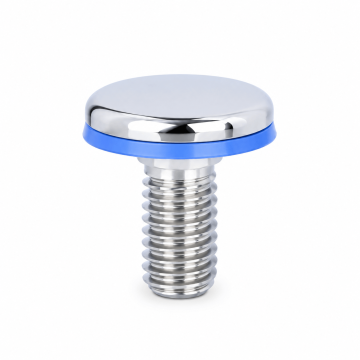
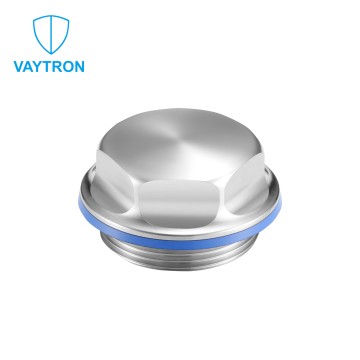
- Polished exterior: Smooth stainless steel surfaces support routine cleaning and inspection at machine support points.
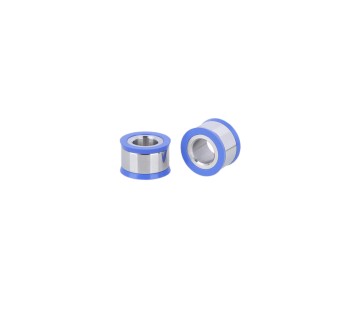
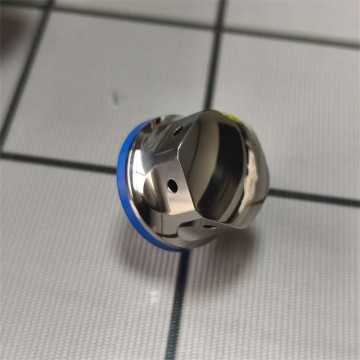
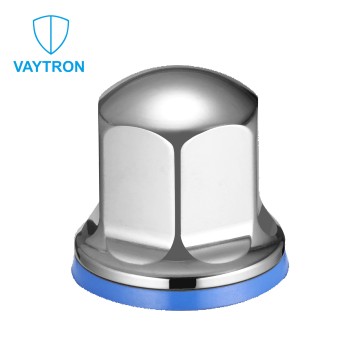
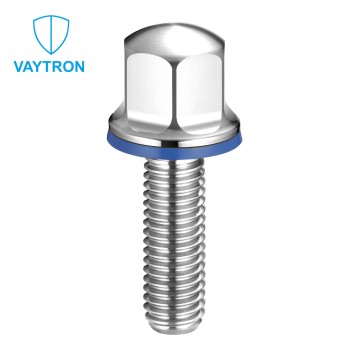
- Visible sealing locations: Blue rings make the sealing locations easier to identify during inspection and maintenance.
- Two mounting versions: Choose a base without floor fixing points or a bolt-down base for installations requiring floor anchoring.
- Defined size choices: Four base diameters and multiple thread and spindle-length combinations help match the machine interface and installation space.
Selection & Ordering
- Select the thread and base diameter for the machine interface.
- Choose a listed spindle length and confirm the required installed height.
- Specify non-bolt-down or bolt-down, stainless steel grade and sealing-ring material.
- Provide quantity, expected load per support point and cleaning conditions.
Example enquiry: VTF-100A-M20; spindle length 160 mm; bolt-down version; requested AISI 316L and EPDM; 24 pcs. Include the installation height, loading and cleaning conditions. The item numbers are retained as catalog references; the mounting version is a separate quotation requirement.
Frequently Asked Questions
Do the two mounting versions use the same specifications?
Yes. Both versions use the selection table above. State the mounting version with your enquiry.
Does “150 or 200 mm” mean adjustment travel?
No. These are two spindle-length options. Confirm installed height and adjustment travel separately.
Can static load be used as a dynamic rating?
No. Use it as catalog data for the individual item. Account for vibration, lateral forces and the actual load distribution.
How should I choose the seal material?
Provide cleaning agents, temperature and exposure conditions. Temperature range alone does not determine suitability.