
Preventing Sealing Ring Deformation: High-Torque Tightening Without Compromising Hygiene
In hygienic engineering, the goal is simple but demanding: create a connection so tight that no bacteria can penetrate, while keeping the seal so "comfortable" that it never loses its shape.
When installing hygienic fasteners or components into a machine body, the natural instinct is to apply maximum torque to ensure a leak-proof fit. However, in a high-stakes processing environment, over-tightening is often just as dangerous as under-tightening. It leads to sealing ring deformation, the primary cause of hidden contamination.
Here is how to master high-torque installation while protecting the integrity of your seals.
1. The Danger of "Elastomer Extrusion"
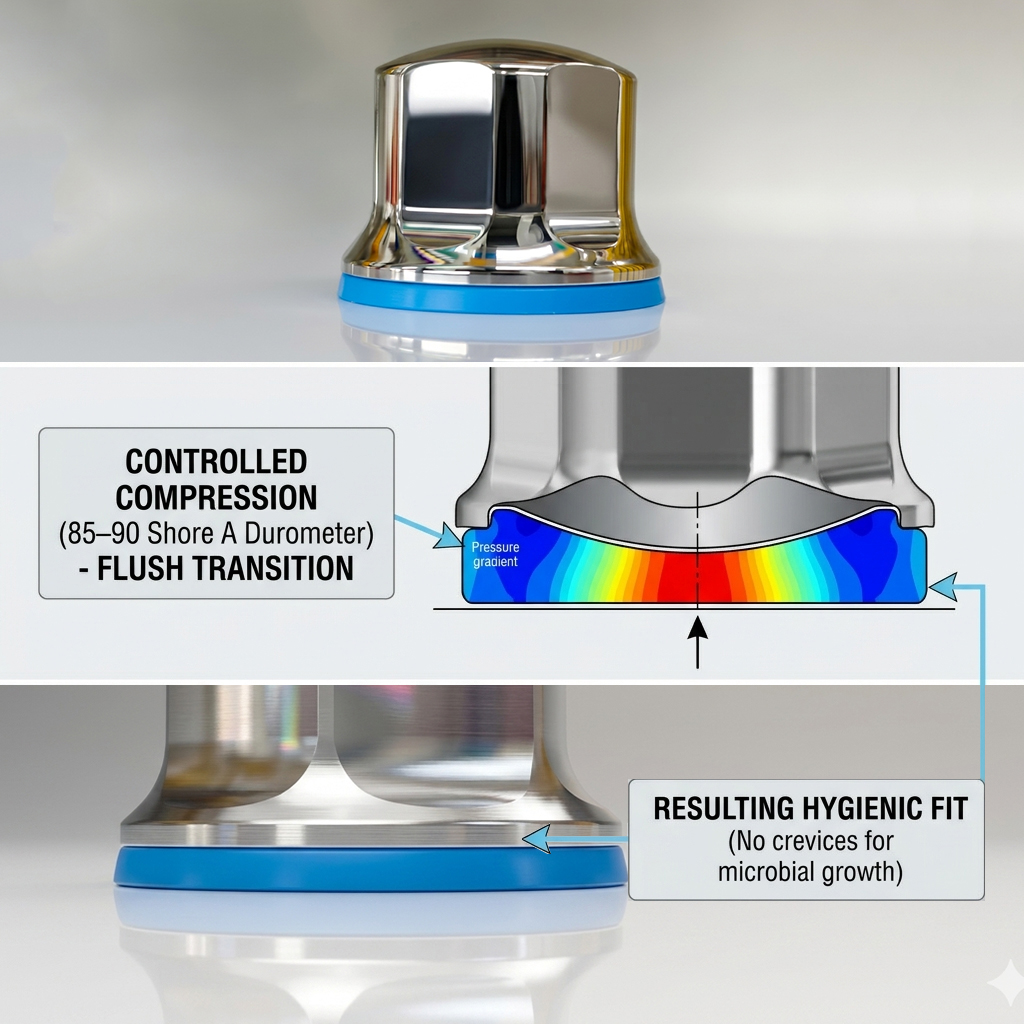
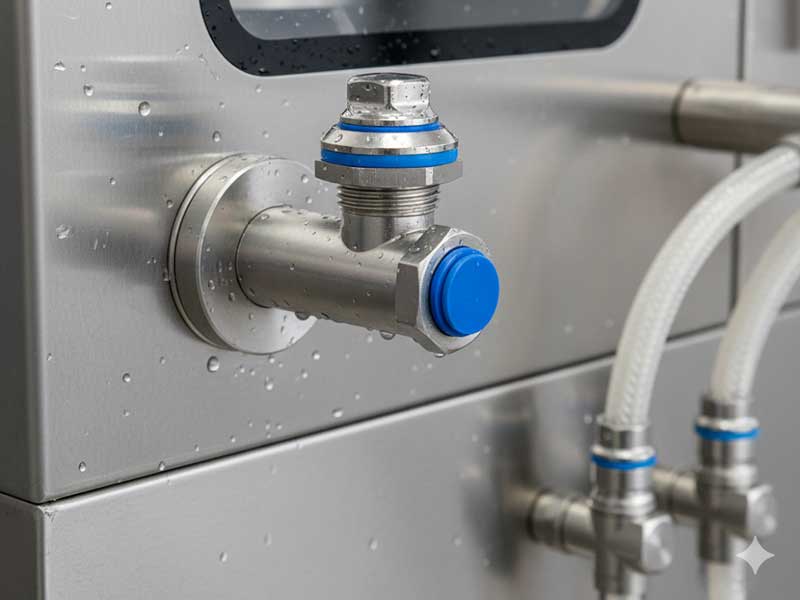
When a bolt is tightened into a machine housing, the sealing ring is compressed between the component head and the machine surface. If the torque is too high, the seal has nowhere to go but out.
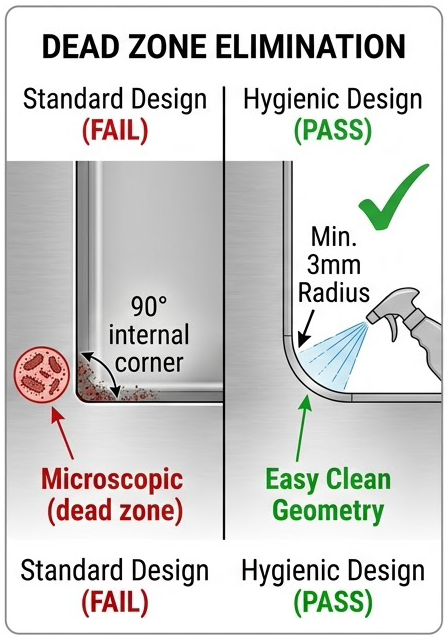
This "extrusion" creates a microscopic lip or bulge. In a food or pharma application, this bulge creates a "shadow" or crevice where product can collect. Even the most advanced Clean-in-Place (CIP) systems cannot effectively reach these areas, turning a simple bolt-hole into a breeding ground for bacteria.
2. Design for "Dead-Stop" Compression
The most effective way to handle high torque is to use components designed with a mechanical stop.
Instead of relying on the rubber seal to stop the bolt, the hardware should be designed so that the metal surfaces eventually meet (metal-to-metal contact). This ensures that the seal is compressed exactly to its intended percentage—usually 20% to 25%—regardless of how much additional torque is applied. This "dead-stop" design protects the elastomer from being crushed.
3. Surface Integrity of the Machine Body
Since your fasteners are being fixed directly into a machine, the condition of the machine’s surface is critical. If the surface where the bolt seats is rough or uneven, technicians often over-torque the bolt to "force" a seal.
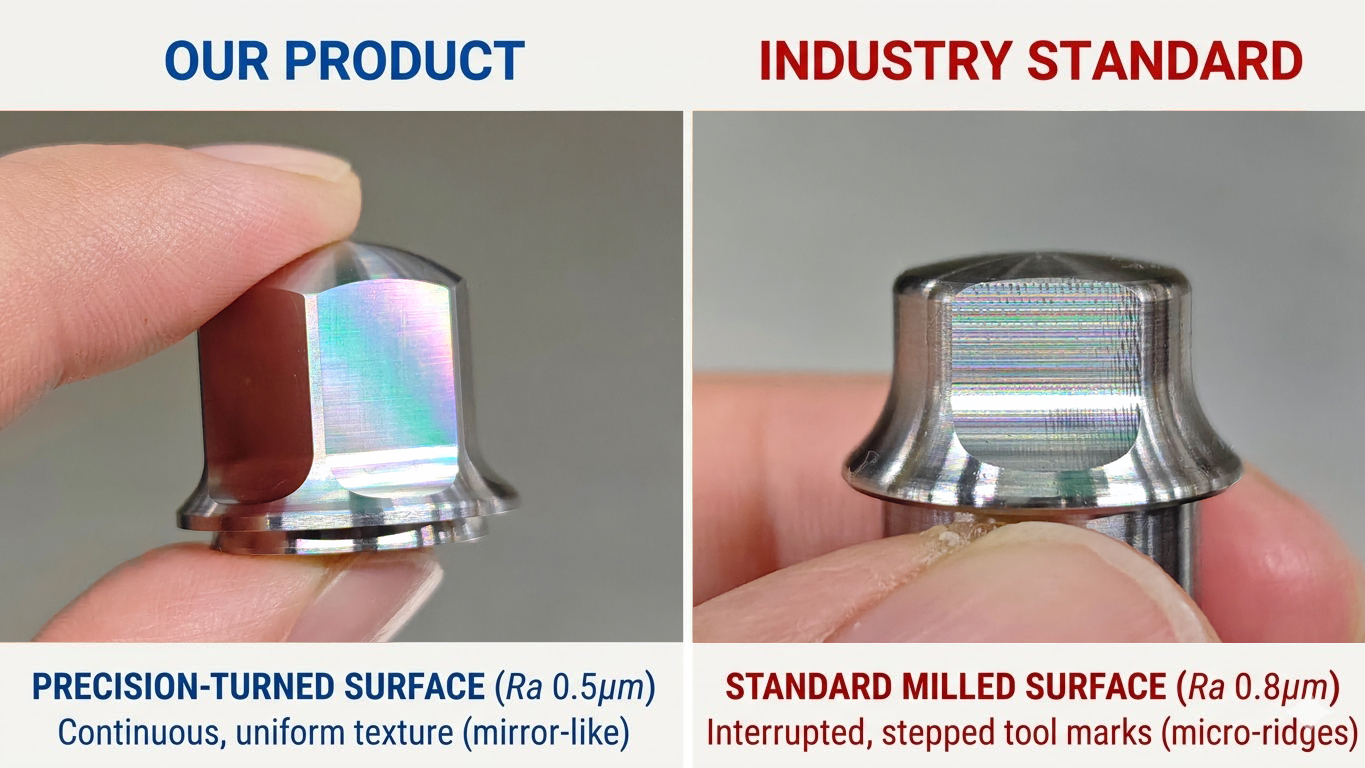
- The Standard:Ensure the mating surface on the machine body is machined to a high finish (ideally Ra 0.8 µm or better).
- The Benefit:A smooth surface allows the seal to seat perfectly with moderate force, removing the need for "excessive" torque that leads to ring failure.
4. Controlled Torque: Use the Right Tools
In a fast-paced assembly or maintenance environment, "tightening by feel" is a liability. Different materials—such as HNBR, EPDM, FKM (Viton), or Silicone(VMQ)—behave differently under pressure.
Always use a calibrated torque wrench. High torque is often necessary to prevent vibration from loosening the bolt, but it must stay within the specific Newton-meter (Nm) range defined for that specific seal hardness (e.g., 85-90 Shore A).
5. Friction and Thread Hygiene
When driving a bolt into a fixed machine body, thread friction can give a "false" torque reading. If the threads are not clean or are slightly damaged, the wrench might click before the seal is actually tight enough. Conversely, a lubricated thread might lead to accidental over-compression.
Ensure that the internal threads of the machine are clear of debris. This ensures that every bit of torque applied is going toward creating a consistent, hygienic seal at the head of the component.
The Bottom Line
In hygienic design, the seal is the most vulnerable point of the machine. By focusing on controlled compression rather than just "maximum tightness," you protect your equipment from the crevices and "dead zones" that compromise food safety.
High torque is a tool for stability—don't let it become a weapon against your hygiene standards.